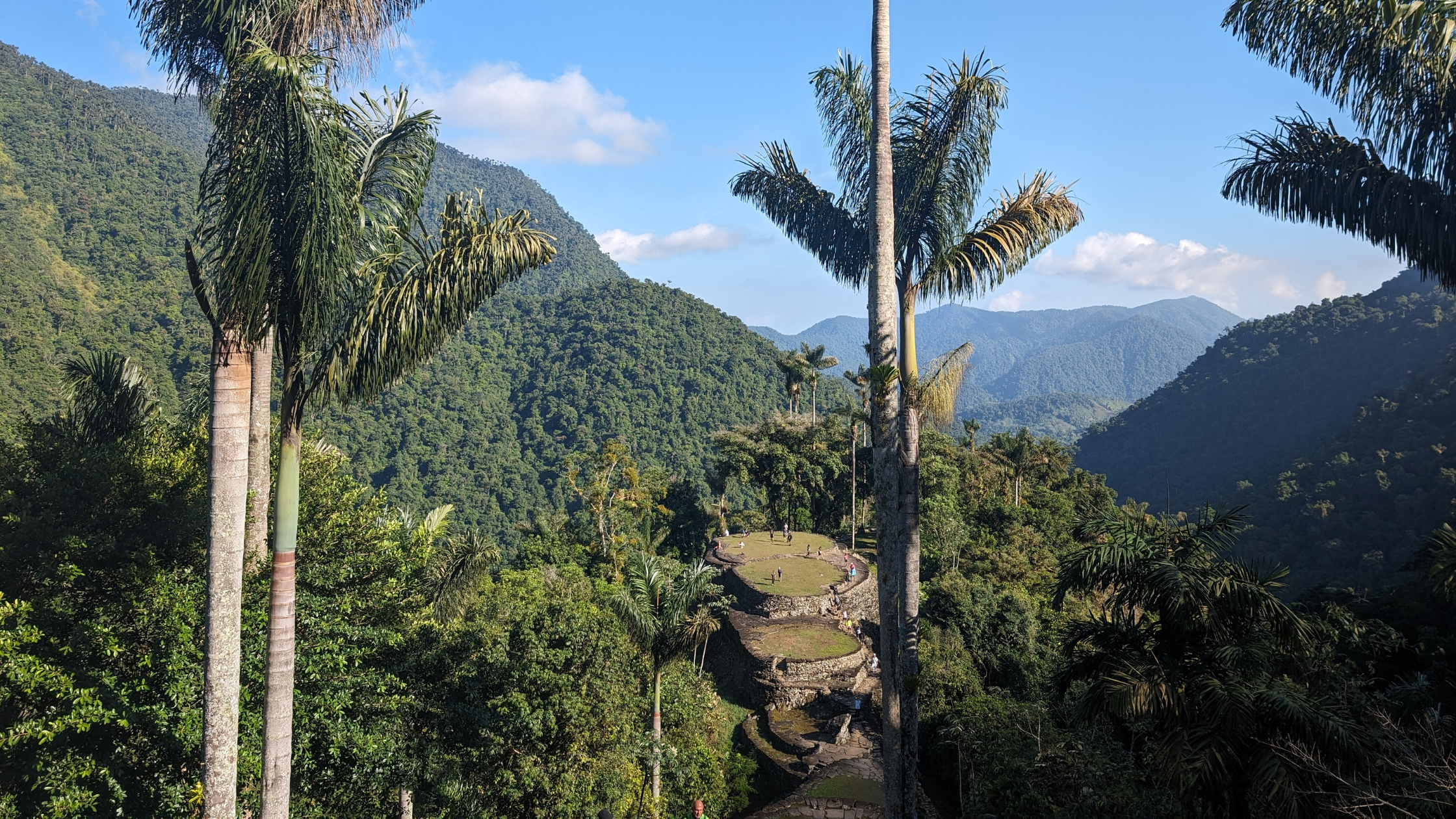
Nestled in the dense jungles of the Sierra Nevada de Santa Marta mountains in Colombia, the Lost City Trek, known locally as “Ciudad Perdida,” offers an amazing hike and incredible views. If you do one trek in your life, let this one be it!
This challenging and scenic hike takes you to the ruins of an ancient city that predates Machu Picchu by several centuries, providing not only a physical challenge but also a deep dive into indigenous culture and history. Here’s everything you need to know about embarking on this remarkable adventure.
The History of Ciudad Perdida
Ciudad Perdida, or Teyuna as it is called by the indigenous people, was believed to be founded around 800 CE, about 650 years earlier than Machu Picchu. The city was a major hub of the Tayrona civilization and is thought to have housed between 2,000 to 8,000 people at its peak. It was abandoned during the Spanish conquest and remained hidden under thick jungle growth until it was rediscovered by treasure hunters in 1972. The site consists of a series of 169 terraces carved into the mountainside, a network of tiled roads, and several small circular plazas. The entrance is marked by a distinct white stone staircase leading to the ruins.
What to Expect on the Trek
The Lost City Trek is a challenging 44-kilometer return journey that generally takes 4 to 5 days to complete, depending on your pace and the tour operator you choose. The trek is not just a physical journey but an opportunity to connect with nature and learn about the indigenous communities that live in the Sierra Nevada.
The Route
The trek typically starts from Machete Pelao, where hikers are driven from Santa Marta. From there, you begin the ascent through lush rainforest, crossing rivers and streams, and passing through Kogi villages. These indigenous people are descendants of the Tayrona civilsation and maintain many of their ancestral traditions.
Difficulty
The path involves steep ascents and descents, with some days requiring 7-8 hours of hiking. The humid weather and tropical heat add to the challenge, making it imperative that hikers are in good physical condition. Despite the toughness, the paths are well-maintained, and the breathtaking views along the way are incredibly rewarding.
Accommodations on the Lost City Trek
Sleeping arrangements are quite basic, with bunk beds in thatched huts provided by the tour operators. All beds have mosquito nets but that is as far as it goes for privacy. The bathrooms are shared and very basic, often lacking toilet paper. So bring some with you on the trek! These camps also serve as communal areas where meals are provided, offering a great chance to bond with fellow travelers.
Best Time to Go
The best time to trek to Ciudad Perdida is during the dry seasons, from December to March and from July to August. This timing helps avoid the region’s heaviest rains, making the hike slightly less challenging. Be aware, twice a year the park closes for the local communities to maintain the region and for cultural events.
Why You Should Go on the Lost City Trek
The Lost City Trek is more than just a hike; it’s a journey into the heart of an ancient world. The trail offers incredible views, from lush jungle and wildlife to rushing rivers and cascading waterfalls, culminating in the awe-inspiring sight of the Lost City itself. The experience of reaching Ciudad Perdida is profoundly rewarding, providing not only a deep sense of accomplishment but also a unique insight into Colombia’s rich archaeological heritage and living indigenous cultures.
The Lost City Trek promises an adventure of a lifetime. It’s a path less traveled that leads to one of the world’s most intriguing archaeological wonder.
Let’s go hiking!
L. as Wilma
Leave a Reply